
Authored by: Michael Boling
Language should never be a barrier to public service.
Communities are more diverse than ever, yet many government websites still rely on English-only content or static translation pages that quickly fall out of date.
That approach doesn’t scale, and it doesn’t meet the needs of modern users.
AI is changing that.
Language Access Is an Accessibility Issue
Accessibility isn’t just about screen readers or keyboard navigation. It’s also about whether people can understand the information presented to them.
For some residents:
- English is not their first language
- Government terminology is unfamiliar
- Translation options are limited or incomplete
Without meaningful language access, digital services become inaccessible, no matter how well designed the interface may be.
Why Traditional Translation Doesn’t Scale
Manual translation requires:
- Duplicating content
- Ongoing updates
- Significant staff time and cost
As websites grow, keeping multiple language versions accurate becomes nearly impossible.
The result is often outdated information or limited language support for only a few pages.
AI Enables Real-Time, Multilingual Access
AI-powered systems can now:
- Interpret questions in dozens of languages
- Retrieve relevant content from existing websites
- Respond in the user’s preferred language
All without duplicating content or maintaining separate language sites.
This allows organizations to:
- Expand language access quickly
- Serve diverse communities more equitably
- Reduce reliance on call centers and manual translation
Multilingual Access Improves Equity and Efficiency
When residents can interact with digital services in their own language:
- Task completion improves
- Errors decrease
- Trust increases
- Staff workloads decrease
Language access becomes a force multiplier, not an operational burden.
Accessibility at Scale Starts With Better Content
The key to multilingual success isn’t more pages.
It’s well-structured, accessible content that AI can interpret and translate accurately.
When content is clear, standardized, and accessible:
- Humans understand it
- Machines understand it
- Everyone benefits
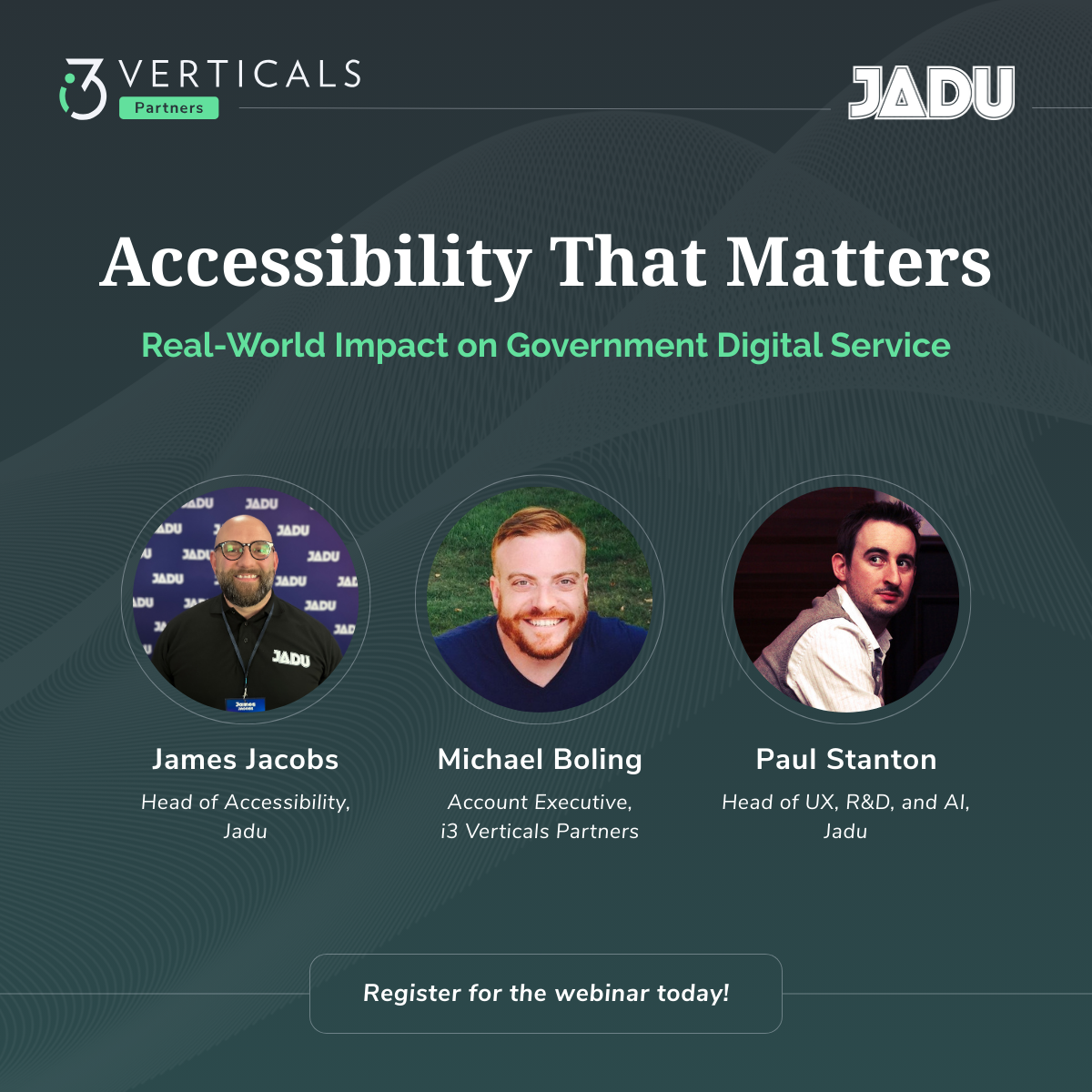
Learn More: Join the Upcoming Jadu Webinar
Multilingual access, accessibility, and AI aren’t future concepts — they’re shaping how public services are being delivered right now.
If you’d like to see how organizations are using accessible content and AI to remove language barriers and improve digital service delivery, we invite you to join our upcoming Jadu webinar. The session will explore real-world approaches to multilingual access, conversational digital experiences, and how accessibility enables smarter, more inclusive self-service.
Whether you’re responsible for digital strategy, accessibility, or service delivery, this webinar will offer practical insights you can apply immediately.
Register for the upcoming webinar and continue the conversation.